







performance scales for the 21st century
information and telephone graphic
44 (0)1424 214 215

Glossary

Accuracy: limit tolerance established after taking the probable errors of hysteresis, nonlinearity, nonrepeatability, and temperature effects into consideration
Ambient Conditions: the medium's conditions (barometric pressure, humidity, temperature, etc.) surrounding the load cell
Ambient Temperature: the medium temperature surrounding the load cell
Angular Load: Concentric has a common axis with the primary axis at the point of application plus is at some angle relating to the primary axis Eccentric is not geometrically centered with the primary axis at the point of application but at some angle it is relating to the primary axis
Axial Load: the load applied the length of, or parallel to, and having a common axis with, the primary axis
Calibration: load cell output comparison against standard test loads
Calibration Curve: the graph showing the relationship of the load cell output against standard test load
Capacity: The recommended maximum weight or force that can be applied to the load cell
Combined Error: the greatest difference from a straight line drawn between original no-load and rated load outputs; it's expressed as a percentage of the rated output; and is measured on both growing and declining loads
Compensation: the use of ancillary items, supplies, or processes to decrease known sources of error
Creep: the load cell's output change which occurs over time while it's under load; all environmental conditions and other variables have remained constant
Creep Recovery: the load cell's change in no-load output which occurs over time after removing a load which was applied for a particular episode of time
Creep Return: the variation in the load cell after its creep recovery process and the reading before the application of that load; the environment and variables have remained constant during the load event
Crosstalk: weighting one load cell down while another load cell is not loaded; the unload cell's output is not to exceed its full-scale capacity
Deflection: the change of length along the primary axis of the load cell involving no-load and rated-load conditions
Drift: A hit and miss alteration in output under the condition of a constant load
Eccentric Load: a load which is applied parallel to, but not having a common axis with, the primary axis
Electrical Excitation: the voltage or current directed to the input terminals of a load cell
Error: the statistical difference between the designated and the true value of the measured load
Fatigue Capacity: amount, as a percentage, of the smallest load limit capacity; derived from a minimum of 100 x 106 cycles from zero to full-fatigue capacity plus a minimum of 50 x 106 from full-fatigue capacity tension to full-fatigue capacity compression load
Frequency Response: the span of frequencies over which the load cell output follows the changeable sine wave mechanical input (within specified limits)
FS: abbreviation for full scale
Full Scale: the amount produced equivalent to the maximum load for a specific application or test
Full Scale Output: the numerical distinction between the least output and the rated capacity
Hysteresis: the greatest difference between load cell output readings for the same applied load; one reading gotten by escalating the load from zero, the other by lessening the load from rated output
Insulation Resistance: the DC resistance calculated between load cell circuit and load cell structure; typically measured at 50 volts under average test conditions
Load: the force, mass, or torque applied to a load cell
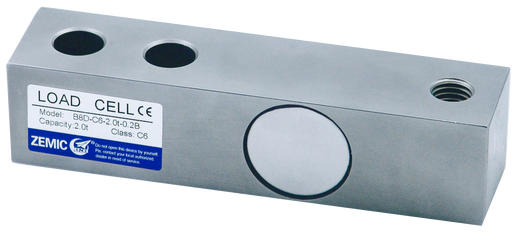
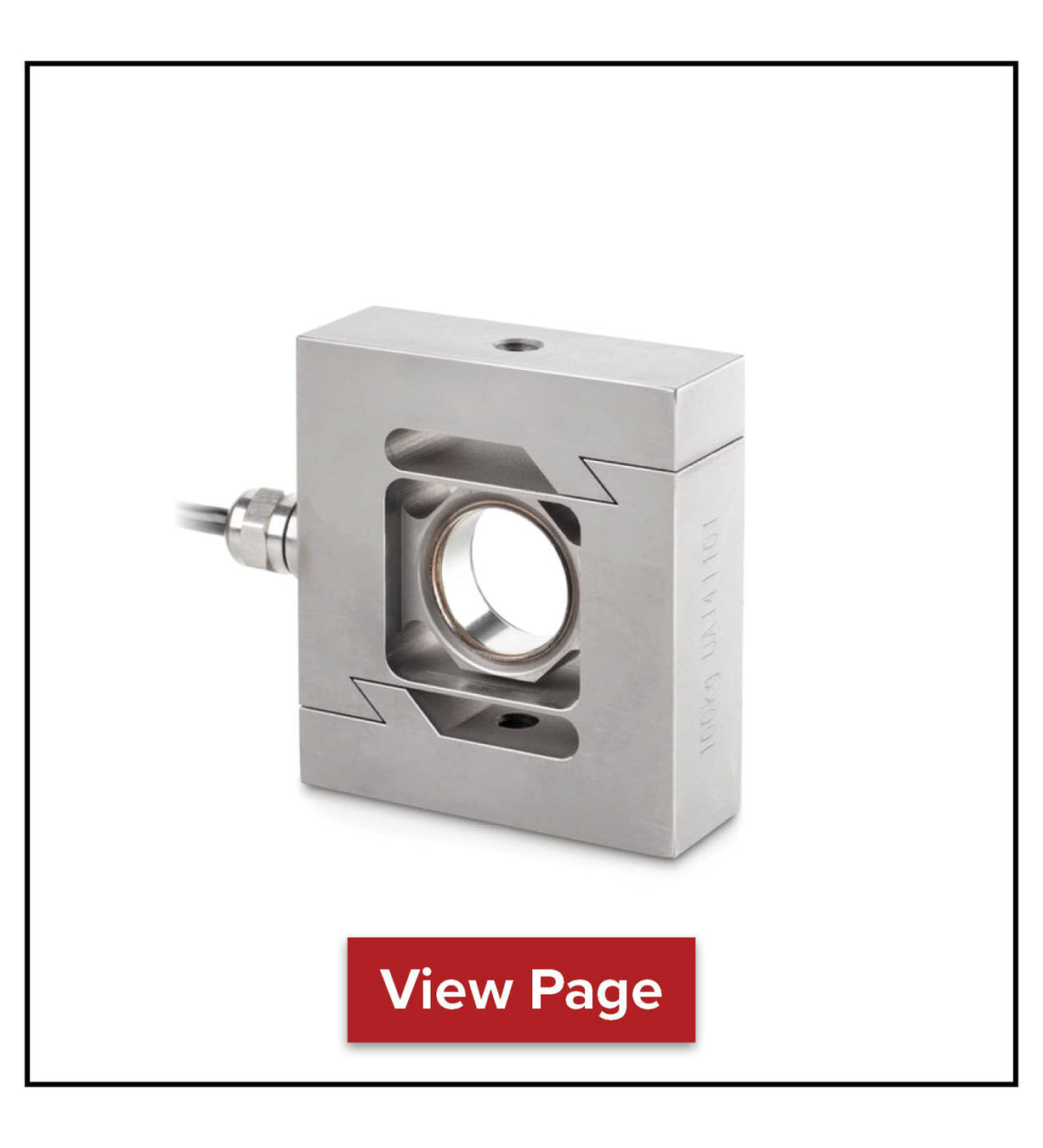
Load Cell: the mechanism that generates an output signal relative to the applied force, mass, or torque
Measured Media: the physical number, property, or circumstance which is measured - acceleration, force, mass, or torque
Natural Frequency: the rate of free oscillations under no-load conditions
No Load: the load cell's condition at its usual physical placement; no force applied; no equipment or load receptors attached
Nominal Load Limit Capacity: the intended standard maximum capacity of a transducer; unless otherwise specified
Nonlinearity: the greatest difference of the calibration curve from a straight line drawn between the no-load and the rated outputs; depicted as a percentage of the rated output; only calculated on increasing load
Output: the load cell's produced signal (current, pressure, voltage, etc.); when directly comparative to electrical excitation, the signal must be expressed in like terms (volts per volt, per ampere, etc.)
Overload Ratings: Safe is the utmost load in percent of rated capacity that can be applied without creating an everlasting change in performance characteristics further than what's specified Ultimate is the maximum load in percent of rated capacity that can be applied without causing a structural breakdown
Primary Axis: the geometric centerline (axis) along which the load cell is designed to be loaded
Rated Capacity or Rated Load: the highest axial load that the load cell is calculated to measure within its specification
Rated Output: the numerical variation between the output at no load and at rated load
Sensitivity: the proportion of change in output to mechanical input
Reference Standard: a force-measuring device with characteristics that are specifically known in reference to a core measure
Non-repeatability
(Repeatability):
the greatest dissimilarity between load cell output readings for continual loadings under the same environmental and loading conditions
Resolution: the least amount of change in mechanical input that makes a change in the output signal
RO: abbreviation for rated output
Shunt Calibration: an electrical simulation of load cell output; done by placing known shunt resistors between suitable points within the circuitry
Shunt-To-Load Correlation: the variation in output readings; acquired through electrically simulated and actual applied loads
Side Load: any load acting 90 degrees to the primary axis at the point of axial load use
Span: the numerical variation between the output at no load and at rated load (rated output)
Specifications: the error confines within which each device will function
Stabilization Period: a time requirement that assures any further change in the parameter being measured is acceptable
Standard Test Conditions: The environmental conditions (temperature of 73.4 degrees +/- 3.6 degrees F or 23 degrees +/- 2 degrees C; relative humidity of 90% or less; barometric pressure of 28 to 32 in. Hg) under which measurements should be made when measurements under any other condition may result in difference of opinion between a variety of observers at different times and locations
Static Extraneous Load Limits: calculation so only one inappropriate load can be applied concurrently with 50% of the nominal load limit applied (300% of the nominal load capacity)
Strain Gauge: a device for measuring which will convert force, pressure, tension, torque into an electrical signal
Span Temperature Coefficient: a change in temperature of the load cell has created a change in rated output; often expressed as a percentage of load per degree of Centigrade temperature change
Zero Temperature Coefficient: a change in temperature of the load cell has created a change in the zero balance; often expressed as a percentage of zero balance per degree of Centigrade temperature change
Temperature Range: Compensated is the temperature range over which the load cell is compensated to keep the explicit limits within for rated output and zero balance Safe is the temperature extremes within which the load cell will function without everlasting unfavorable change to any of its performance characteristics
Terminal Resistance: Corner To Corner is the load cell's circuit resistance measured at specific adjacent bridge terminals; at standard temperature; no load applied; and with open-circuited electrical excitation and output terminals Excitation is the load cell's circuit resistance at the electrical excitation terminals; at standard temperature; no load applied; and with open-circuited output terminals Signal is the load cell's circuit resistance measured at the output signal terminals; at standard temperature; no load applied; open-circuited electrical excitation terminals
Traceability: the transfer process, step by step, by which the load cell's calibration can be correlated to primary standards
Zero Adjustments: tuning the load cell to affix the output signal at zero when zero load or zero pressure is applied
Zero Balance: the load cell's output signal rated excitation; no load applied; usually expressed in percent of rated output
Zero Return: the difference in zero balance measured immediately before rated load application of specific extent; measured after removal of the load; measured again when the output has stabilized
Zero Shift, Permanent: an everlasting modification in the no-load output
Zero Stability: the load cell keeps its zero balance when there are constant environmental conditions and other variables
Loadcells
Electronics
Support